Warehouse Network Automation ROI & Labor Restructuring
April 3, 2026
Insight
About this solution
Approach
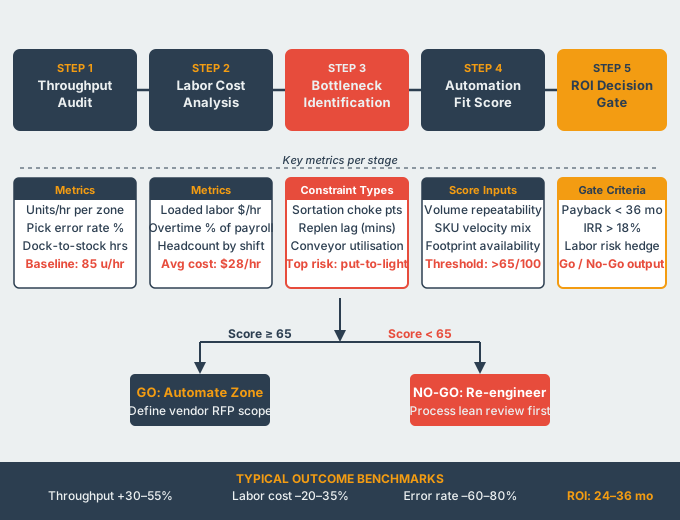
Assessment starts with constraint mapping: measure actual throughput by process step (receiving, putaway, picking, packing, shipping), labor cost per SKU movement, and cubic meter utilization under peak load. This identifies whether your ceiling is equipment (conveyor/sortation speed), labor allocation (wrong headcount in wrong roles), network design (facility layout or multi-site routing), or demand volatility (peak seasonality masking structural problems). ROI modeling then stress-tests automation scenarios against your specific labor cost structure and order profile—not industry benchmarks. Labor restructuring models are built from your actual wage data, not regional averages. Recommendations prioritize sequence: what moves first, what follows only if throughput remains constrained. Delivery is a decision memo, not a binder.
In practice
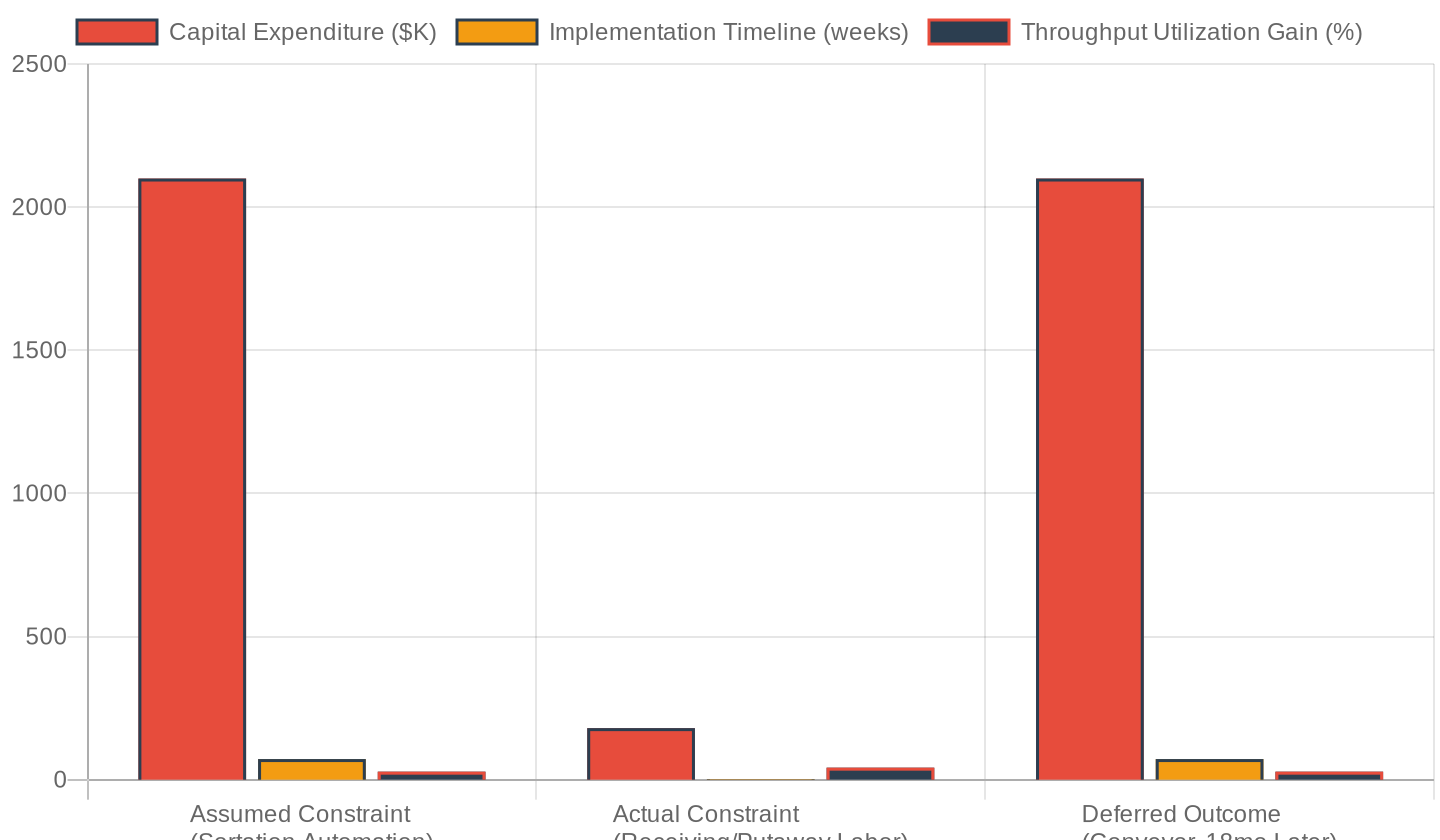
A 350K-SKU regional 3PL was hitting 87% capacity utilization in September-October, turning away 12-15% of peak orders. Leadership assumed sortation conveyor automation was necessary—vendor quote: $2.1M. Diagnostics showed receiving and putaway were the actual bottlenecks, not sortation. Labor cost per unit jumped 6.2% in peak weeks because putaway staff were undertrained on new SKU velocity. Restructuring the role (cross-training receiving staff into putaway rotation, adjusting shift timing, outsourcing some putaway to a partner facility 8km away) cost $180K in training and logistics premium. Result: capacity ceiling moved from 87% to 94% utilization. Seasonal labor cost per unit reduced 3.1% year-round. The sortation conveyor was deferred 18 months, saving $2.1M in capital and 6 months of project risk. Client returned 14 months later for the conveyor when actual demand had grown 22%.
Scope and fit
This engagement fits warehouses or 3PL networks operating 250K+ SKUs across 2+ facilities, with seasonal or cyclical demand that's hitting operational ceiling without clear visibility into which constraint is binding. Prerequisites: 18+ months of internal labor and throughput data (WMS and payroll accessible), willingness to model worst-case seasonality scenarios, and decision authority on headcount and capital allocation. Out of scope: facilities sub-150K SKUs where labor leverage is too thin, networks where demand is purely erratic (not seasonal), and situations where real estate constraints or lease terms force consolidation before optimization is tested. Not a fit if your ceiling is caused by customer-mandated service levels (next-day delivery to 47 states) that automation cannot overcome—that's a business model problem, not an operations problem.
Provider expertise
11 years in warehouse operations: 8 years as Operations Director at a 400K+ SKU regional 3PL managing 3 facilities, then 3 years as independent consultant on automation ROI and labor restructuring for logistics networks. Hands-on with WMS tuning, labor scheduling models, automation vendor evaluation, and facility network design. Specific depth in conveyor/sortation systems, labor cost modeling, and peak-season readiness diagnostics. Fluent in the math of throughput constraints and the politics of seasonal headcount.
Contact
Loading…