HR Digital Transformation: Fixing Adoption Before You Pick Tools
April 2, 2026
Insight
About this solution
Approach
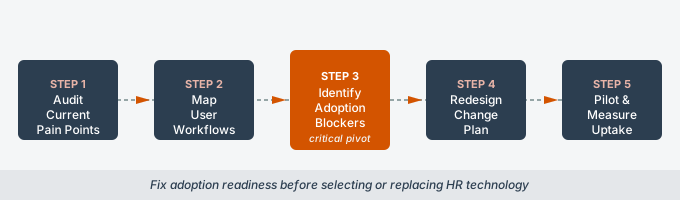
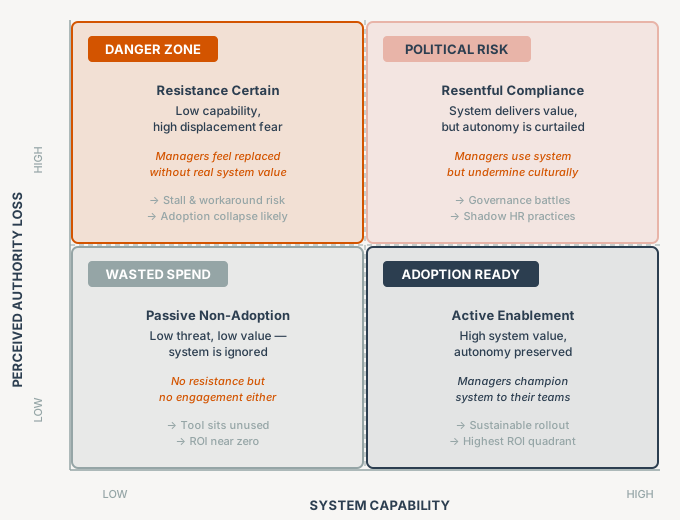
We map where operational authority currently lives in your HR processes and explicitly identify what managers fear losing before implementation. Through structured conversations with 8-15 frontline managers (not focus groups—individual interviews), we surface the real adoption blockers: fear of algorithmic decisions overriding judgment, visibility into decisions that were previously opaque, accountability for metrics they can't control. We then redesign workflows and role definitions so managers retain meaningful authority while gaining efficiency. This happens before you onboard end users. Implementation success is measured by adoption rates at 80%+ by month three and sustained usage of core functions (not aspirational ones) by month six.
In practice
A 2,800-person food production company deployed a modern HCM platform but saw adoption plateau at 38% among production supervisors by month four. We interviewed 12 supervisors and found the real issue: shift scheduling moved from supervisor negotiation with their crews to a 'system-generated' schedule that appeared inflexible and ignored crew preferences they'd always accommodated. We worked with operations and HR to redesign the workflow so supervisors could input crew constraints (new parent needing Wednesday evenings, worker recovering from injury requiring temporary light duty) before the system optimized the schedule. At three months post-redesign, supervisor adoption reached 82%, and turnover in supervised roles dropped 6 percentage points year-over-year—directly tied to crews feeling heard.
Scope and fit
Best fit: manufacturers, distributors, and healthcare operators with 1,500–6,000 employees and frontline manager populations of 80+. You need to be past vendor selection (or very close). This work is wasted on organizations that haven't committed to a platform or don't have a rollout date. Out of scope: HR shared services transformation, payroll process redesign, or recruiting workflow optimization—those require different approaches. Also out of scope if your leadership team isn't willing to redesign workflows based on what managers tell us; if you want to force adoption as-is, this method won't help.
Provider expertise
11 years building HR technology function at a 4,000-person manufacturing operation, followed by advisory practice focused on mid-market digital HR transformation. Deep experience in HRIS deployment, change management rooted in operational reality (not change management theory), and stakeholder mapping that surfaces what people won't say in public meetings. Led 18–24 transformation engagements where adoption and sustained usage, not go-live dates, defined success.
Contact
Loading…