CRM Implementation Strategy: Operating Model Before Software
April 2, 2026
Insight
About this solution
Approach
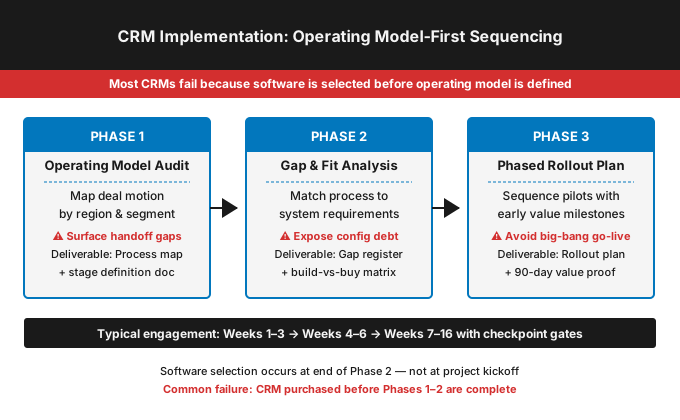
I work backwards from your current operating model, not forwards from the software. First: audit how deals actually move, how your team makes decisions, where the real data lives (it's not where your system of record says it is). Second: map the gap between what you do now and what the system requires — this gap is your real implementation scope, and it's rarely what the vendor estimated. Third: sequence the change in phases that let people see value in weeks 2-3, not month 6. Tools matter, but operating model comes first. If Salesforce is the answer, we make it stick. If it's not, I'll tell you that too — it's happened three times.
In practice
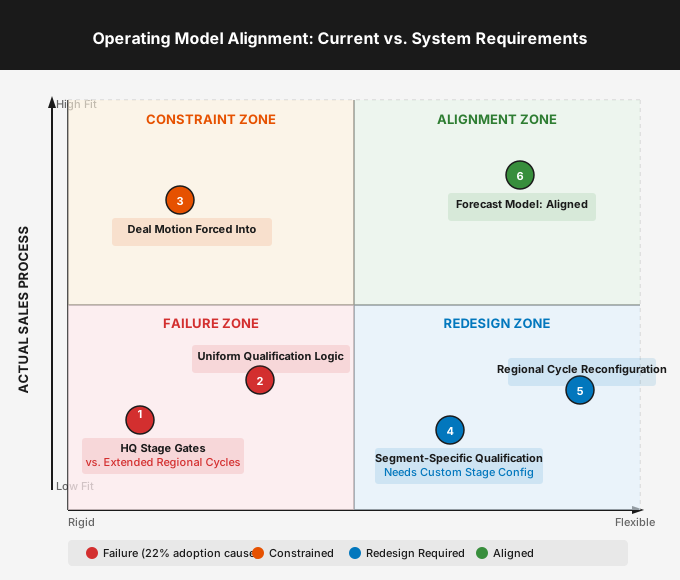
Mid-market SaaS company, £8M ARR, 35-person sales team spread across three regions. Salesforce was live but adoption stuck at 22% after month three — field reps were still logging deals in email threads because the sales process in Salesforce didn't match how their deals actually moved (their reps had 40% longer sales cycles than HQ expected, so the stage gates in the system were disconnected from reality). We spent week one mapping the actual pipeline — what the field was doing, why, what decisions depended on which data. Turns out the regional teams had developed their own qualification logic because HQ's rules didn't account for a major customer type that paid differently. We rebuilt the pipeline stages to reflect actual deal motion for each customer segment, not one-size-fits-all. Adoption hit 71% in month two and stayed there because reps were logging deals the way they already worked. Revenue reporting accuracy improved from 'roughly correct' to audit-ready. The software didn't change. The operating model did.
Scope and fit
This works best when you're 4-12 weeks into an implementation and something's already signalling a problem — adoption is flat, your team is workaround-heavy, or you're realising the system doesn't fit how you actually operate. It requires senior sales leadership and ops to spend 10-15 hours mapping current state (you have to tell the truth about how things really work, not how the process doc says they work). This is not a full implementation delivery service — I'm not doing your data migration or training your team day-to-day. I'm fixing the strategic decisions that make or break implementations. Works less well if you have zero CRM experience and need handholding through basic configuration; that's better handled by a systems integrator. Also difficult if executive leadership is already locked into a decision and won't revisit it — I can't overrule that.
Provider expertise
11 years in CRM operations: 8 years scaling Salesforce across 200+ person teams as VP of Sales Operations at a SaaS company, managing go-live, adoption, and the scaling chaos that comes after. Founded a boutique CRM advisory practice focused on implementation strategy, not delivery. I've completed 18-24 engagements across tech, fintech, and SaaS — most of them recovery projects where the initial implementation stalled. Deep hands-on experience with Salesforce configuration, pipeline architecture, and the conversation between sales strategy and system design that separates projects that stick from projects that fail.
Contact
Loading…