AI Implementation: Pilot to Production (Not Graveyard)
April 2, 2026
Insight
About this solution
Approach
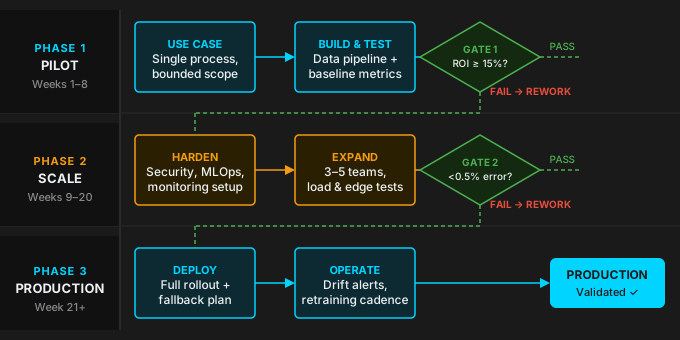
I start by auditing your data governance, pipeline stability, and team structure before writing a single line of production code. The approach has three phases: (1) Infrastructure readiness assessment — identifying the gaps between pilot environment and production reality that kill most implementations; (2) Staged rollout design — building a deployment path that doesn't require rewriting your data foundation, but does require fixing the critical gaps first; (3) Handoff to your engineering team — ensuring your people own the system, not a consultant. I use cloud-native architectures (AWS SageMaker, GCP Vertex, or Azure ML depending on your existing stack) and focus on observability and retraining workflows from day one, not as an afterthought.
In practice
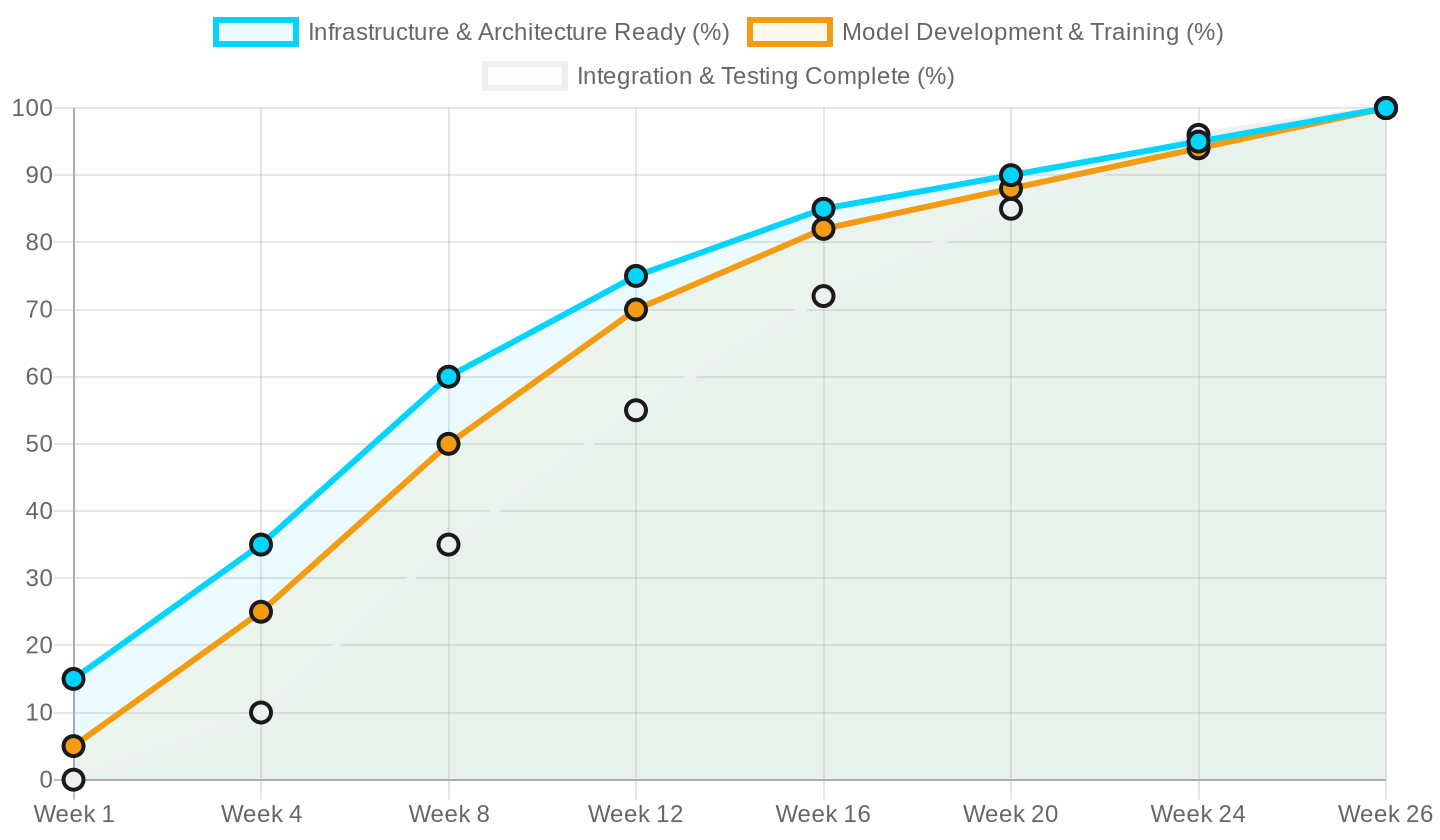
A mid-market lending platform had built a credit risk model that improved approval accuracy by 8%. Their AI implementation vendor wanted to deploy it across 50,000 monthly applications. I found that their data pipeline had three different definitions of 'applicant income' coming from different systems, updated on different schedules, with no reconciliation layer. The vendor's timeline was 12 weeks to production. I told them it was 24 weeks minimum, starting with a data governance sprint. We spent weeks 1-6 building automated reconciliation and quality gates. Weeks 7-12 we built the model pipeline. Weeks 13-24 we staged rollout to 10% of volume, monitored for data drift, and trained their ops team to manage retraining triggers. The system deployed on week 26. It's been running in production for 18 months with 94% uptime and no unplanned retraining events. The original vendor would have deployed on week 12 to a system that would have failed by week 16.
Scope and fit
Best fit: VP of Data or Chief Analytics Officer at a mid-market company (50–500M revenue) with a working model and a board mandate to deploy it. You have data infrastructure (cloud data warehouse, basic ETL), but it was built for reporting, not real-time model serving. You have 15–40 data and engineering people, not 200. Out of scope: Companies with no data infrastructure yet (you need to build that first with a data engineer, not an AI consultant). Greenfield AI strategy from scratch (different engagement). Companies where the board doesn't actually want to deploy — just wants to say they're doing AI (I don't do those).
Provider expertise
11 years building and scaling AI/ML systems in production environments. Built the ML engineering team at a fintech (2012–2019) from one person to 12, deployed six models to production serving 2M+ daily transactions, debugged every failure mode between model and operations. Founded a boutique implementation firm in 2019 focusing specifically on the gap between proof-of-concept and sustained production systems. Worked with 24 enterprise engagements across financial services, insurance, and lending — average engagement duration 5–7 months from readiness assessment to operational handoff.
Contact
Loading…