ERP Implementation Consultant — Post-Go-Live Stabilization
April 2, 2026
About this solution
Problem this solves
You're a CFO, COO, or IT Director who has just approved a $2–5M ERP investment. The project team promises go-live in Q3. Nobody is discussing what happens on Day 91, when your finance team is still closing month-end manually because the system isn't trusted, your warehouse is running dual-entry because cutover was too fast, and your implementation partner is already on to the next client. That's when the real failure starts.
Approach
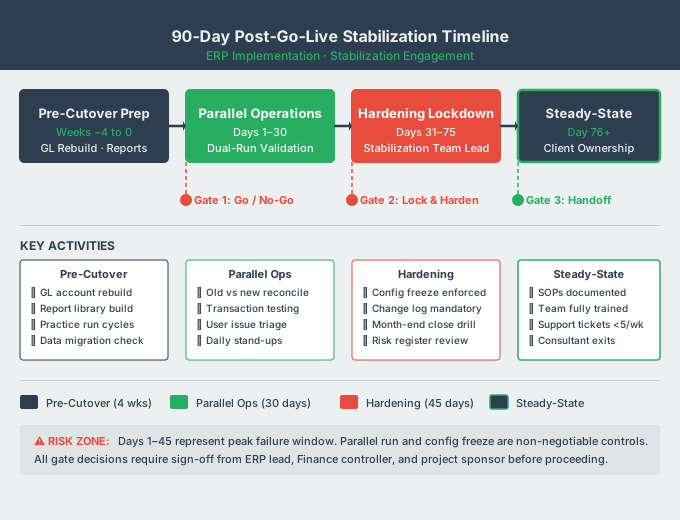
I run a 90-day post-go-live stabilization engagement that begins 4 weeks before cutover. The approach: (1) Build a dedicated stabilization team with ownership of daily bug triage, user workaround documentation, and data reconciliation — this is not the implementation team's job anymore; (2) Establish a 'trust metric' dashboard that tracks adoption blockers (system speed, data accuracy, missing reports) weekly, with remediation timelines assigned; (3) Run parallel operations for exactly 30 days post-go-live, not 60 or 90 — longer parallel runs drain budget and delay real adoption; (4) Lock in a 45-day 'hardening window' where no new features are added, only stabilization work. Most teams try to do all of this with exhausted project staff. I do it with fresh personnel and a fixed scope. The CFO sees cost savings in the second month when the parallel run ends early.
Insight
Most ERP consultants measure success by on-time go-live. I measure it by whether the team actually uses the system 120 days out. I've seen companies with perfect cutover that end up maintaining a shadow IT system for 18 months because the ERP couldn't handle month-end close — and those failures weren't the software's fault. They were planning failures. The data team never talked to the finance team about what 'close-ready' actually meant. The real work is forcing that conversation 60 days before cutover, when you still have time to fix it. Most consultants skip this because it's not a system problem — it's a political one. I don't skip it.
In practice
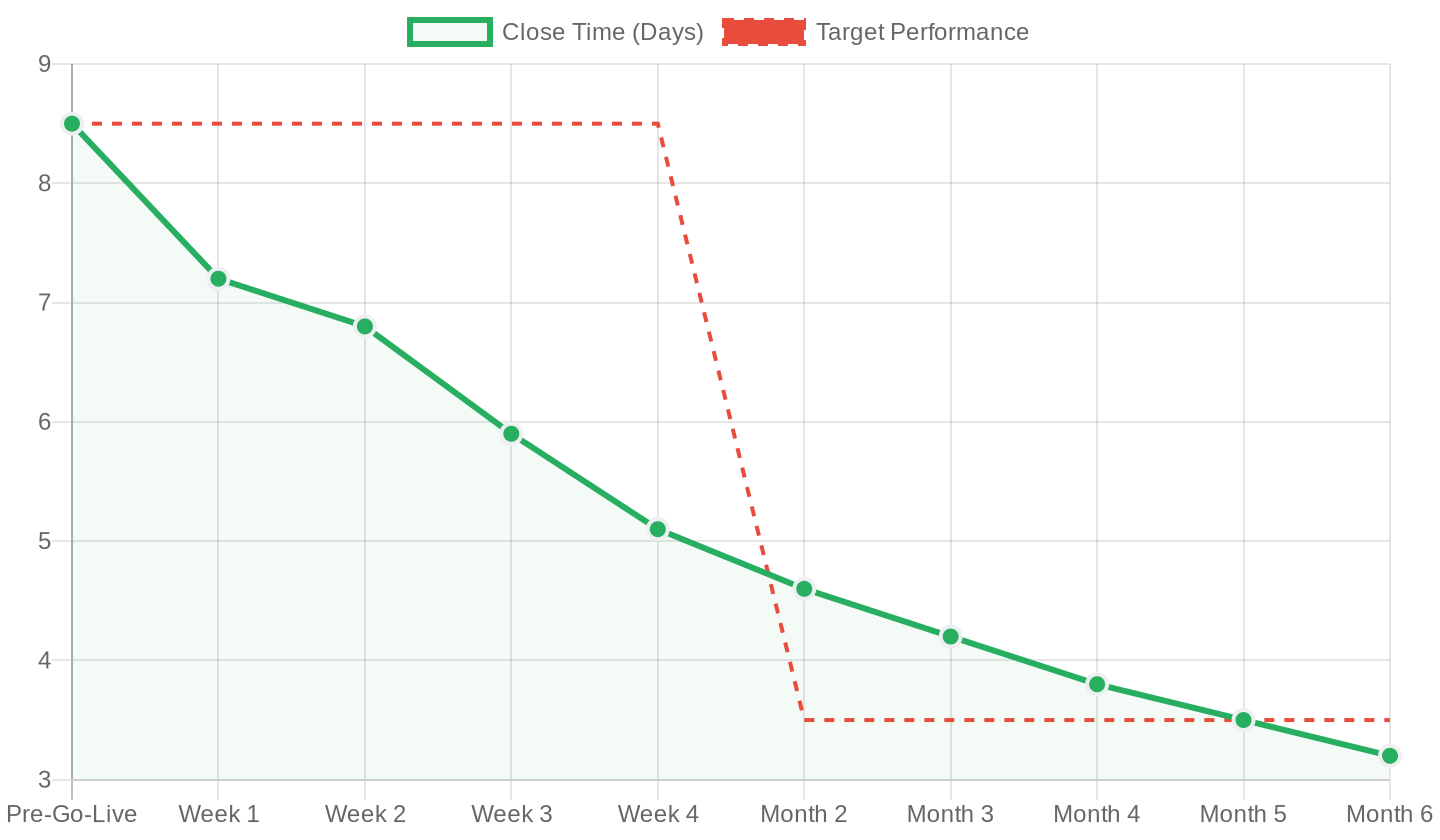
Mid-market manufacturer, $150M revenue, 280 employees. Oracle Cloud ERP, 18-month implementation, $2.1M budget. Project was on time, cutover date firm. I was brought in 6 weeks before go-live. The finance team had never actually run close in the new system. When we did a practice close, it took 11 days instead of 4 because reconciliation reports didn't exist and the GL structure didn't match what they were actually using. The implementation partner's response: 'We'll document the workaround.' I stopped that. We rebuilt three GL hierarchies and built four custom reports in 4 weeks, then ran 3 full practice cycles before cutover. Day 1 of production: still slow, but salvageable. Day 30: close time was 6 days — not 4, but acceptable. By Day 90, with the stabilization team owning process cleanup (not new features), close time hit 4.5 days. The parallel run was cut from 60 to 35 days, saving $240K. The CFO renews my contract every year because the system actually works.
Scope and fit
This engagement fits manufacturing, distribution, and supply-chain-heavy mid-market companies (200–1,000 employees) where month-end close, inventory accuracy, or order-to-cash cycles are non-negotiable. You need to have already selected your ERP platform and have a go-live date confirmed within 120 days. This does NOT include system selection, technology architecture decisions, or custom development work — those are upstream. This also does NOT work well for companies whose implementation is already 90+ days past go-live; at that point, you're managing failure, not preventing it. I focus on the window where prevention still works.
Expertise
12 years in ERP implementation: 8 years as SAP implementation lead at Deloitte (40+ go-lives across manufacturing, automotive, and logistics), 4 years running independent stabilization engagements for mid-market manufacturers and distributors (18–22 active engagements annually). Deep expertise in post-cutover adoption metrics, parallel operations management, and finance process redesign. Hands-on with Oracle Cloud, SAP S/4HANA, Microsoft Dynamics 365, and NetSuite — platform-agnostic because the problem is process and governance, not the tool.
Contact
Loading…