Supplier Relationship Risk Assessment & Transition Planning
April 3, 2026
About this solution
Problem this solves
Procurement teams implement cost reduction strategies that look sound on spreadsheets but fail in execution because they underestimate how much operational stability depends on informal relationships, undocumented workarounds, and supplier credit arrangements that don't appear in contracts. The result is disruption, quality failures, and relationship breakdown that costs more to fix than the savings ever returned.
Approach
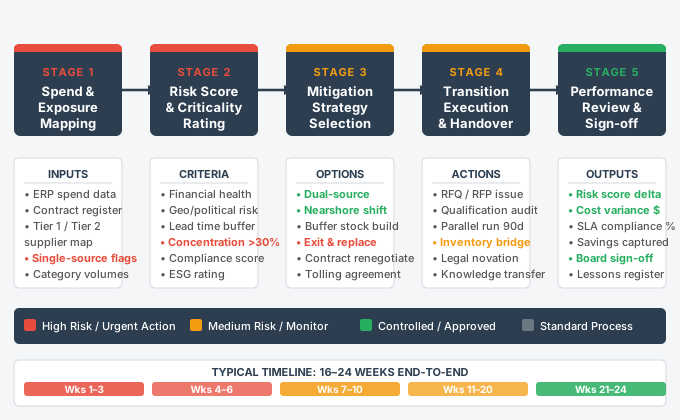
Map the informal relationship architecture of your supply base through structured interviews with operations, quality, and finance teams—not just procurement. Identify which suppliers hold disproportionate operational leverage, which relationships are sustained by personal trust rather than process, and where cost reduction initiatives will create friction before they create value. Build a transition sequence that manages supplier relationship friction explicitly, securing informal agreements and relationship continuity before formal changes take effect. This is done in parallel with traditional cost analysis, not after.
Insight
The supplier who complains least about your payment terms or delivery changes is often the one with the least flexibility to absorb disruption—not the one most satisfied. Suppliers with alternatives push back early. Suppliers locked in by switching costs, custom tooling, or relationship debt stay quiet until they can't deliver. The CFO sees cost; operations discovers the problem in a missed shipment.
In practice
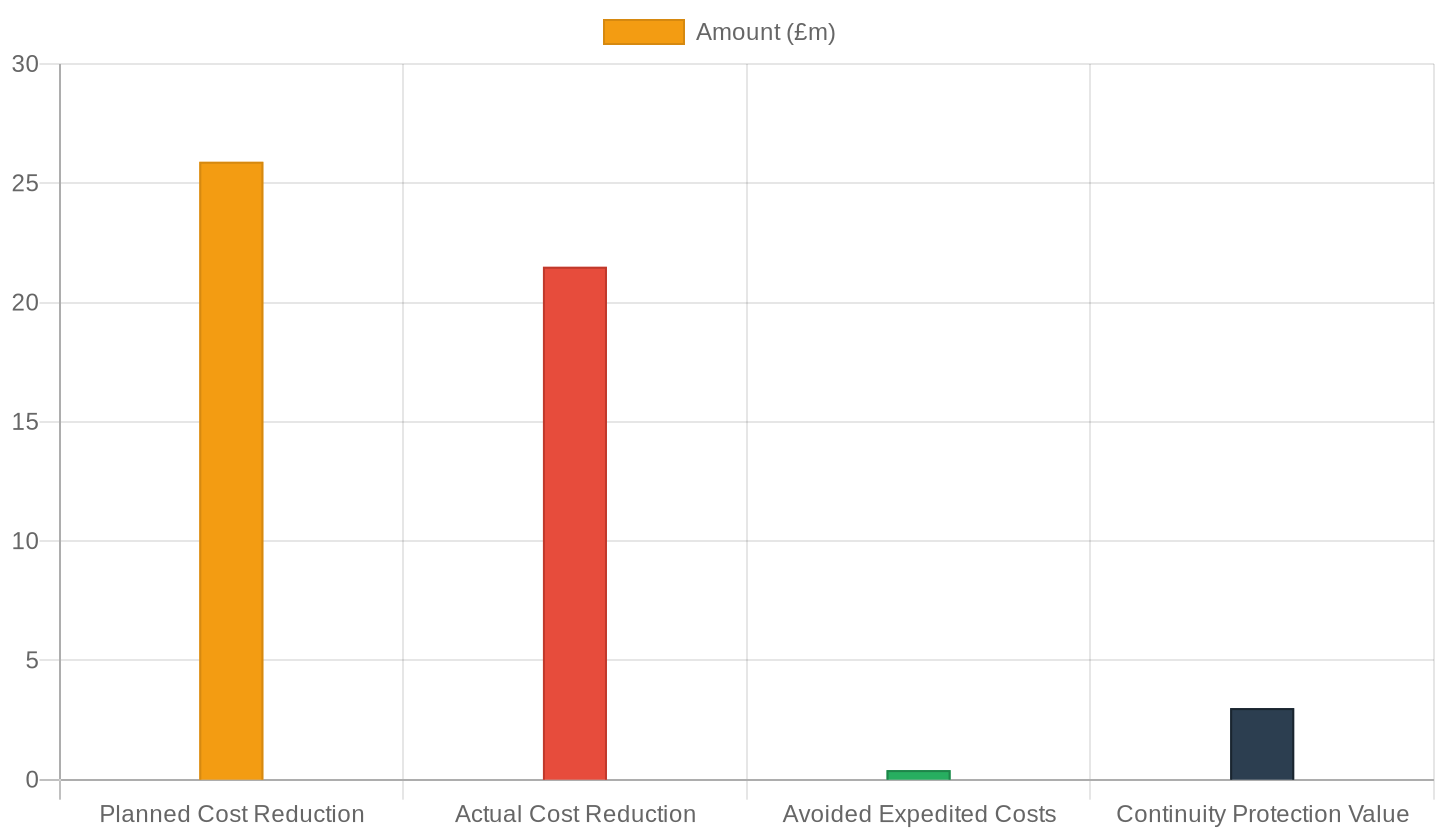
An automotive parts manufacturer with £185m annual procurement spend planned a supplier consolidation to reduce head count and contract complexity. Standard analysis identified 12 primary suppliers for rationalization. Direct interviews revealed that three of those suppliers held undocumented arrangements with operations—expedited deliveries outside standard terms, acceptance of short lead time changes, and informal quality waiver agreements that had evolved over 6+ years with specific procurement contacts who were retiring. Implementing the consolidation as planned would have triggered immediate supply disruption. Instead, we sequenced the transition: first, codified the informal arrangements into documented processes and secondary suppliers; second, trained operations on the new process; third, executed the consolidation. Cost reduction target was 14%; achieved 11.6% in year one while preserving supply continuity and avoiding the £400k+ in expedited recovery costs that would have offset the savings.
Scope and fit
Best suited to manufacturing, discrete industrial, or complex supply chain environments where supply base concentration, custom specifications, or long lead times create operational dependency. Requires access to operations and quality leadership, not just procurement. Not the right fit for commodity supply chains with multiple interchangeable suppliers or for organisations where procurement operates in functional isolation from operations. Assumes willingness to document and formalise relationships that have been informal—some suppliers and internal stakeholders resist this visibility.
Expertise
11 years in procurement leadership, including 8 years as Head of Procurement for a £2.8bn manufacturing conglomerate managing 300+ active suppliers and 18–24 concurrent cost reduction and supply chain restructuring engagements. Deep experience in supplier risk assessment, relationship mapping, and transition execution in capital-intensive manufacturing. Built procurement advisory practice focused specifically on cost reduction execution in complex supply chains where relationship risk is the limiting factor, not strategy.
Contact
Loading…